Dubai Flying Cars: The Future of Urban Transportation
Introduction
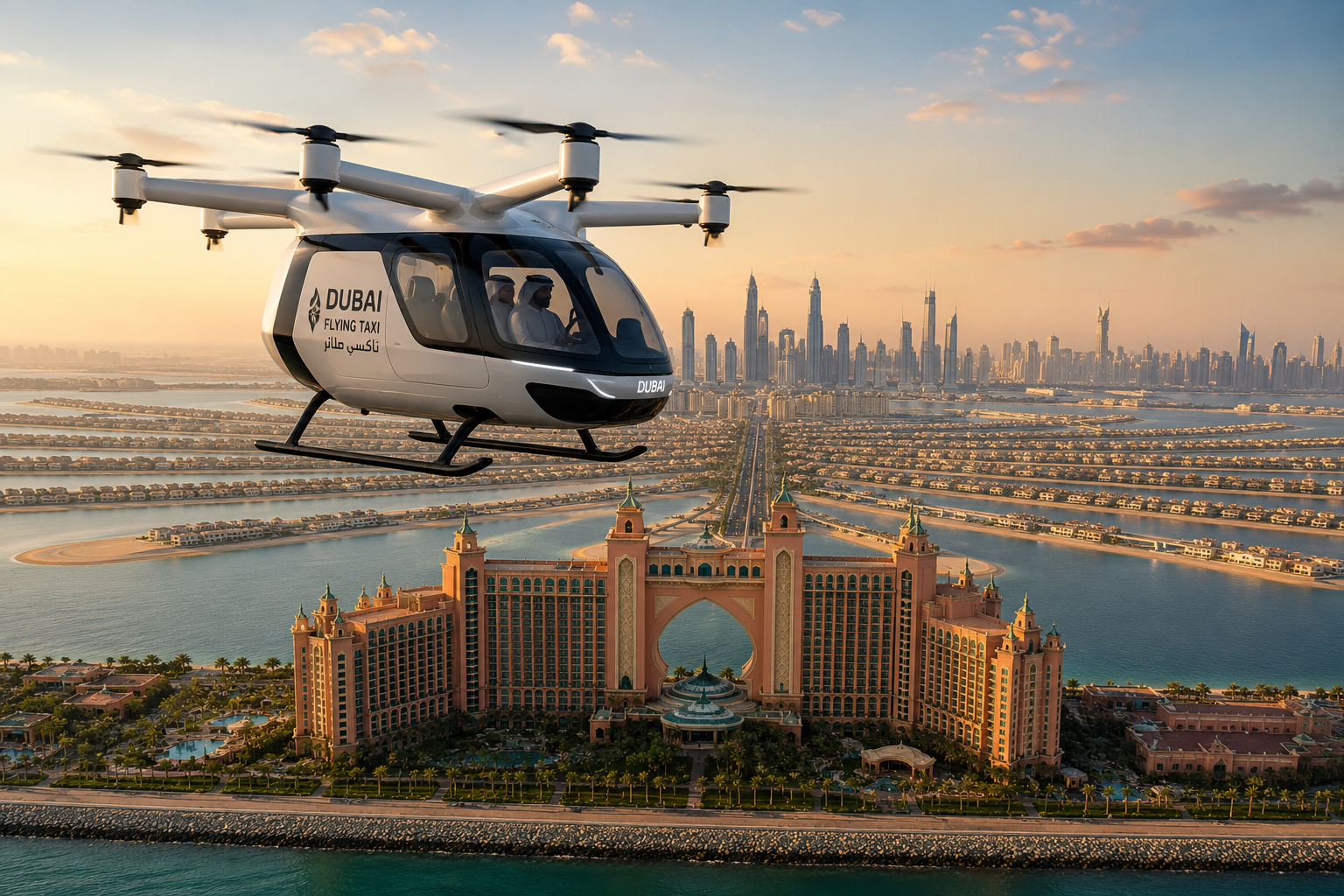
Dubai is known for embracing innovative technologies, and one of its most exciting projects is the introduction of electric flying taxis, often called "flying cars." These aircraft are designed to reduce traffic congestion, shorten travel times, and provide a cleaner, more efficient way to travel around the city. Dubai aims to become one of the first cities in the world to operate a commercial air taxi network.
What Are Dubai's Flying Cars?
The vehicles planned for Dubai are electric vertical take-off and landing (eVTOL) aircraft. Unlike traditional airplanes, they do not require long runways. They take off and land vertically like helicopters while being quieter and producing zero direct emissions during flight.
Each aircraft is expected to:
- Carry one pilot and up to four passengers.
- Reach speeds of around 320 km/h (200 mph).
- Travel up to 160 km on a single charge.
Companies Behind the Project
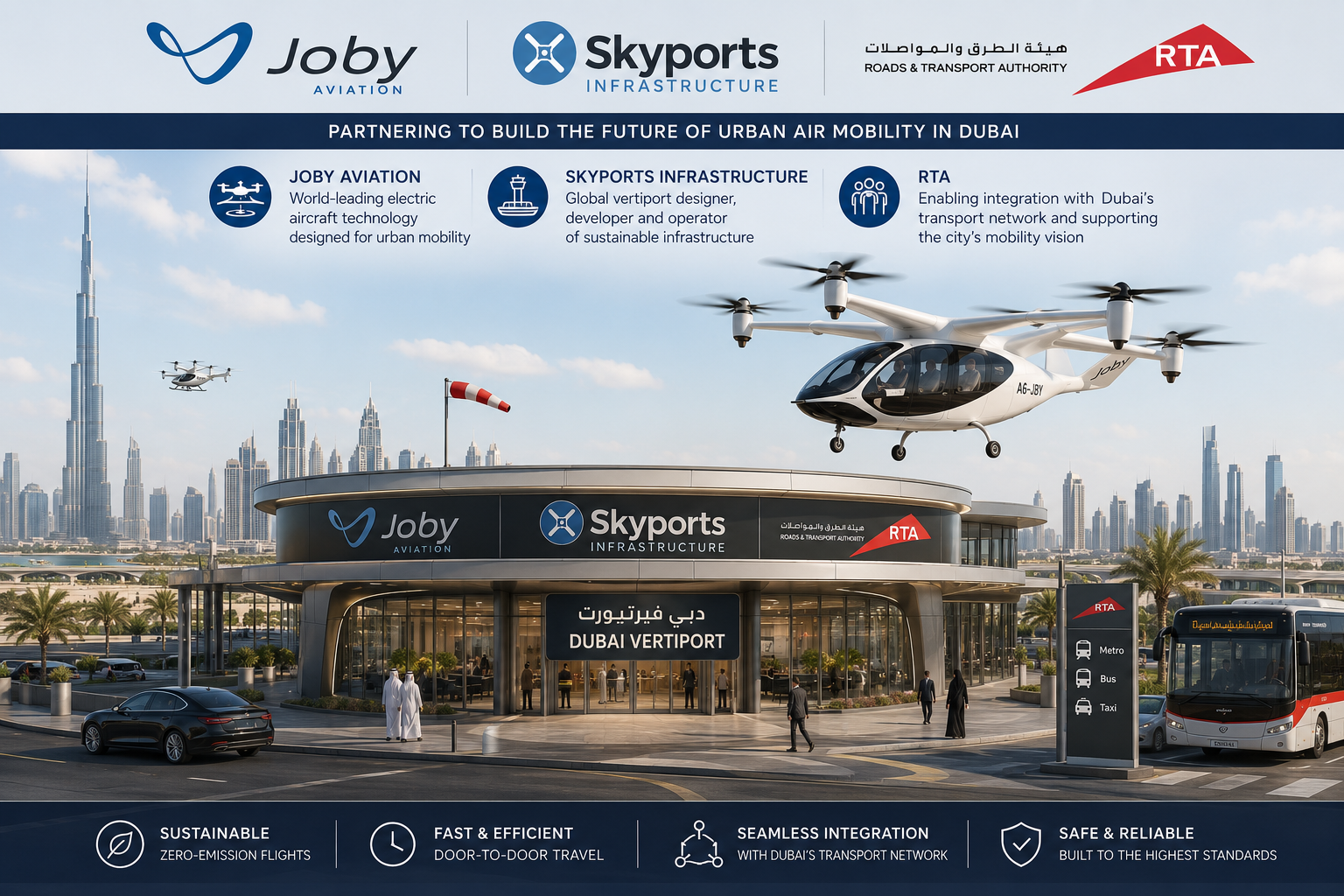
Dubai's flying taxi project is being developed through a partnership between:
- Joby Aviation, which manufactures and operates the electric aircraft.
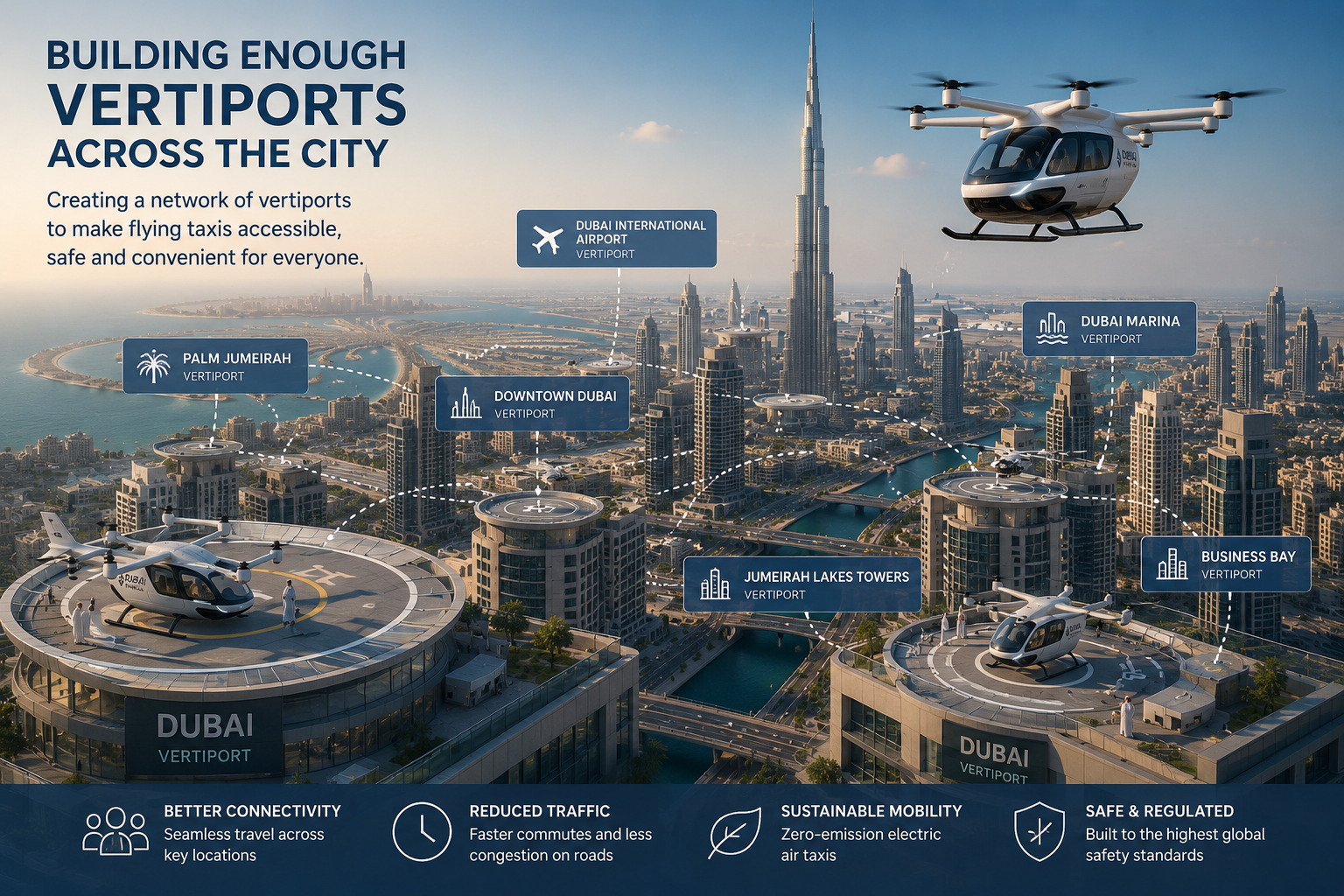
- Skyports Infrastructure, which is building the take-off and landing stations called vertiports.
- Dubai's Roads and Transport Authority (RTA), which oversees the project and integrates it into the city's transport network.
Vertiports
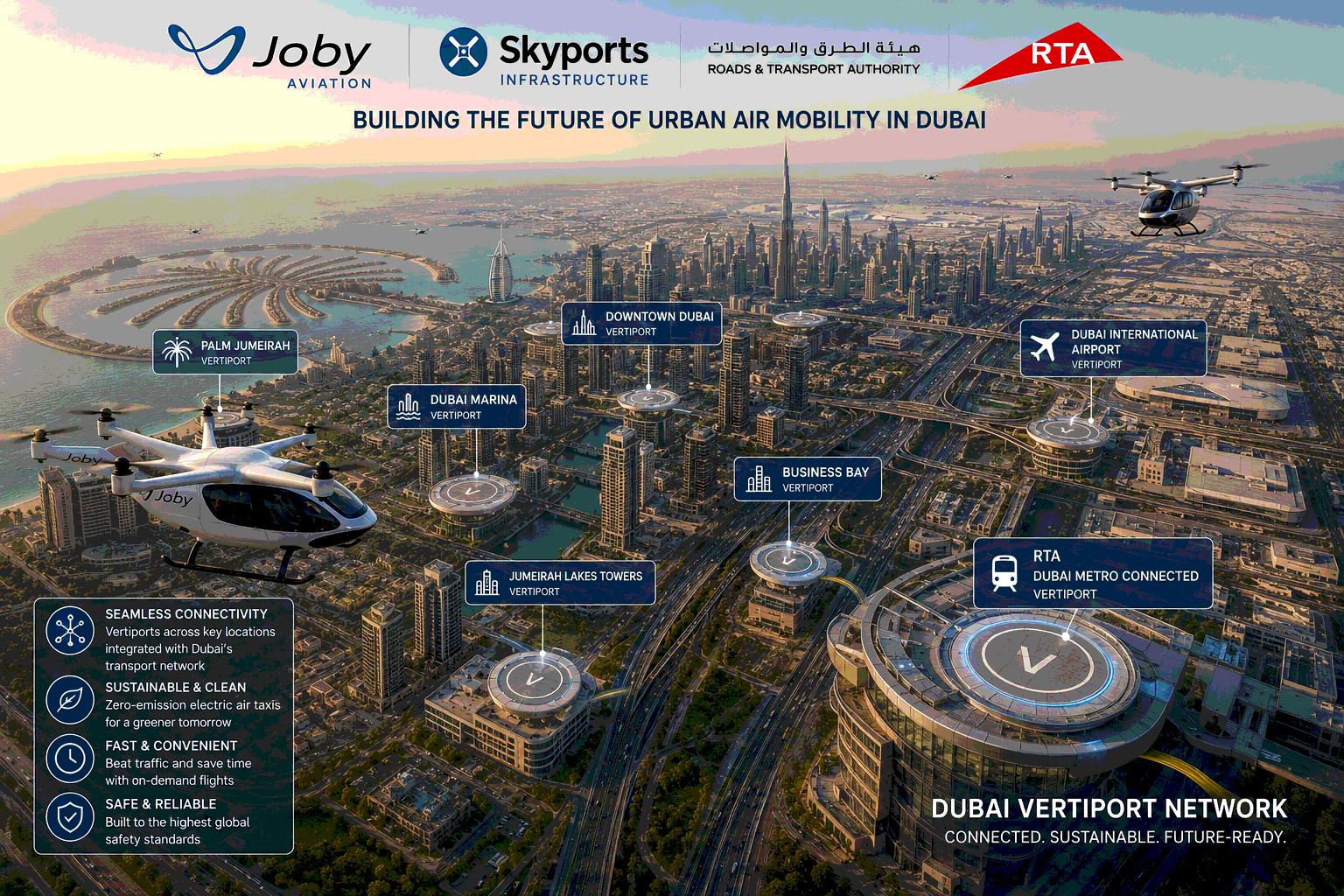
The first phase of the project includes four major vertiports located at:
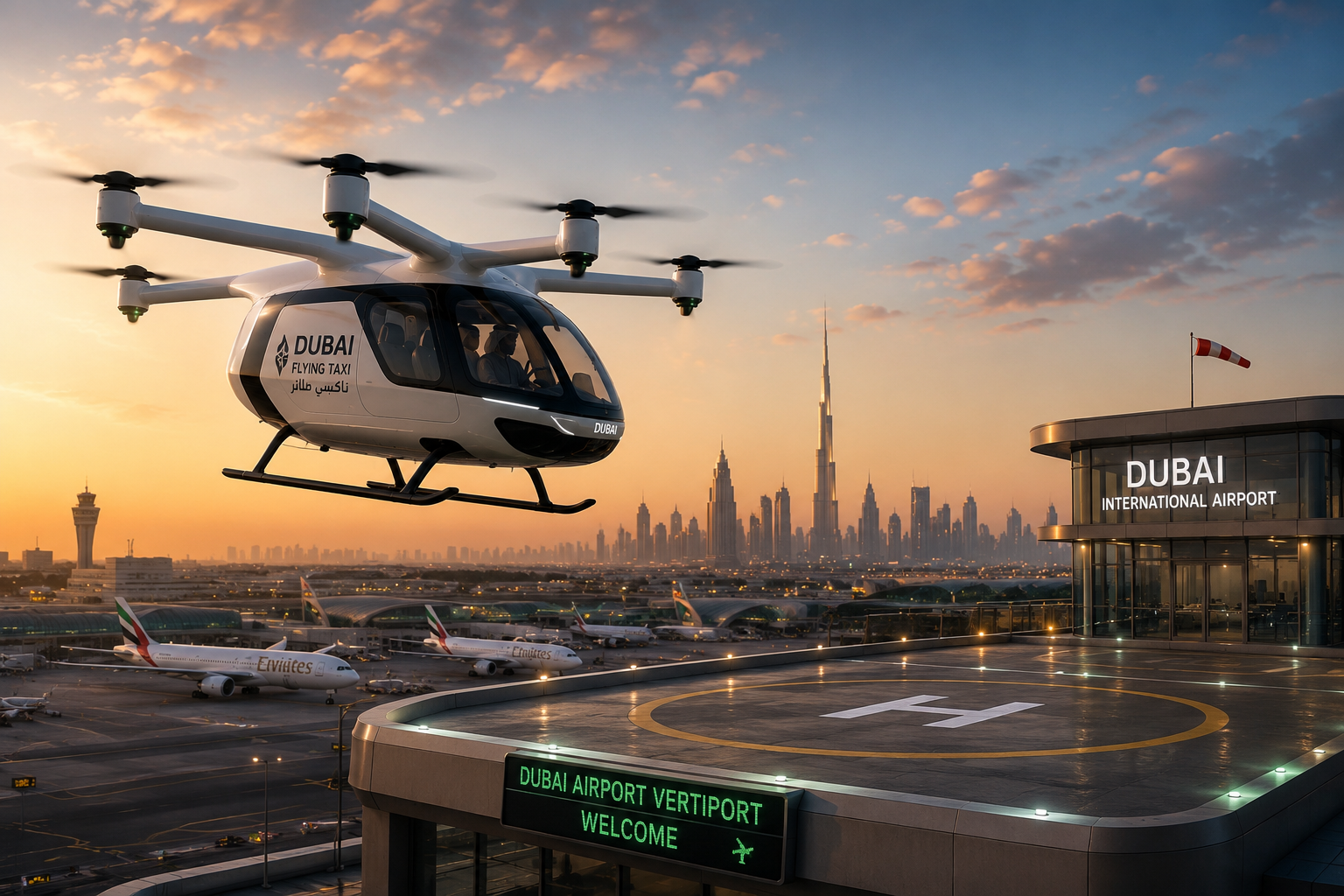
- Dubai International Airport (DXB)
- Downtown Dubai
- Palm Jumeirah
- Dubai Marina
These stations will include passenger waiting areas, security screening, charging facilities, and take-off and landing pads.
Benefits of Flying Cars
The flying taxi service offers several advantages:
- Faster travel: A trip from Dubai International Airport to Palm Jumeirah could take about 10–12 minutes, compared with about 45 minutes by car during normal traffic.
- Reduced traffic congestion on busy roads.
- Environmentally friendly because the aircraft are fully electric.
- Quiet operation, making them more suitable for city environments than helicopters.
- Supports Dubai's Smart City vision by introducing advanced transportation technology.
Challenges
Although the project is promising, several challenges remain:
- Building enough vertiports across the city.
- Meeting strict aviation safety and regulatory requirements.
- Managing weather conditions such as high temperatures and strong winds.
- Making ticket prices affordable so more people can use the service.
Future Plans
Dubai plans to launch commercial air taxi services beginning in 2026, with operations expanding as more aircraft and vertiports become available. The long-term goal is to integrate flying taxis with the Metro, buses, and other public transport to create a seamless travel experience.
Conclusion
Dubai's flying car project represents a major step toward the future of urban transportation. By combining electric aircraft, advanced infrastructure, and smart city planning, Dubai aims to make travel faster, safer, and more sustainable. If successful, the project could become a model for cities around the world and transform the way people commute in the coming years.